Evaluating a Health and Fitness Planner for Your Wellness Journey
Embarking on a structured health and fitness journey often requires more than motivation; it demands organization. A dedicated health and fitness planner serves as a centralized tool to track nutrition, exercise, progress, and goals over a defined period. Specifically, planners like the 90-Day Exercise Diet Journal format offer a pre-structured framework to guide users through a quarter-year of focused effort. This article explores the role, utility, and considerations of such planners to help you determine if this tool aligns with your personal health management strategy.
What is a Health and Fitness Planner?
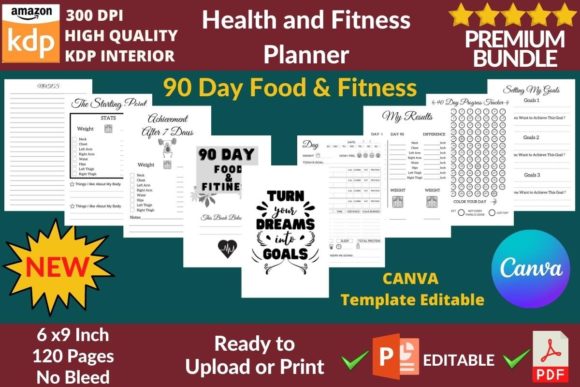
A health and fitness planner is a journal or log designed to systematically record details pertinent to a wellness regimen. The core function is to provide a consistent place for daily entries, transforming intangible efforts into tangible data. A typical example, such as the 90-day planner described, includes pages for logging daily meals—breakfast, lunch, dinner, snacks—along with metrics like total calories, protein, fiber content, and water consumption. Beyond daily logs, it often incorporates supplementary sections for long-term tracking, including body measurement pages, progress trackers, goal-setting worksheets, and results summaries.
These planners exist in multiple formats. They can be physical, printed inserts for binders, digital files used on tablets or computers, or formatted specifically as low-content books for platforms like Amazon Kindle Direct Publishing (KDP). The editable nature of many modern templates, offered via tools like Canva or PowerPoint, also allows for personalization before use or publication.
Key Components and Structure
The structure of a comprehensive health and fitness planner is built around accountability and reflection. A 90-day framework provides a substantial period to establish habits and observe trends. Essential components usually include:
- Daily Log Pages: The foundation for recording food intake and nutritional metrics each day.
- Progress Trackers: Visual tools, like charts or tables, to monitor changes over weeks and months.
- Goal-Setting Sections: Dedicated pages to define and refine short-term and long-term objectives.
- Measurement Pages: Space to periodically record physical metrics such as weight or body measurements.
- Reflection Areas: Pages for notes, achievements, and analyzing results to foster mindful engagement.
Reasons for Interest and Potential Benefits
Individuals might consider using a structured health and fitness planner for several reasons. The primary driver is often the need for a clear, organized system to replace fragmented or informal tracking methods. The benefits of adopting such a tool can be significant when it matches the user's approach.
- Enhanced Accountability: The act of daily writing creates a commitment loop, making it harder to overlook dietary choices or skipped workouts.
- Data-Driven Insights: Consistent logging generates a dataset that can reveal patterns, like specific nutrient deficiencies or correlations between hydration and energy levels.
- Goal Clarification: The process of filling out goal-setting pages forces concrete thinking, moving from vague desires like “get healthier” to specific targets.
- Motivation Through Visibility: Progress tracker pages allow users to see small improvements accumulate, which can combat discouragement during plateaus.
- Reduced Cognitive Load: Having a predetermined format eliminates the daily question of “what should I track today,” streamlining the routine.
Tradeoffs and Important Considerations
While the benefits are clear, a health and fitness planner also introduces certain tradeoffs. It is not a universally perfect solution, and its effectiveness depends heavily on user behavior and context.
The most significant consideration is the time and discipline requirement. A detailed planner demands daily time investment for accurate logging. For individuals with highly variable schedules or who dislike paperwork, this can become a burden, potentially undermining the wellness journey itself. The granular focus on metrics like calories and protein might not suit those pursuing non-quantitative, intuitive eating approaches or mindfulness-based wellness.
Another tradeoff involves flexibility versus structure. Pre-formatted pages offer guidance but can also feel restrictive if your specific needs deviate from the template’s design—for instance, if you need to track micronutrients not listed, or if your exercise regimen requires different metrics. This is where editable templates become valuable, as they allow modification before use.
Finally, the format choice—printable, digital, or KDP book—carries practical implications. A printable planner offers tactile satisfaction but requires physical storage. A digital planner provides convenience and portability on devices but may be less immersive. Publishing as a KDP low-content book is an option for creators but is a different use case aimed at distribution rather than personal consumption.
Situations Where This Planner is a Strong Fit
The 90-day health and fitness planner is particularly well-suited for certain scenarios and user profiles. It aligns strongly with individuals who are embarking on a defined, time-bound transformation, such as a 90-day fitness challenge or a pre-holiday wellness reset. People who thrive on structure and enjoy data analysis will likely find the detailed logging and tracker pages rewarding.
It is also a strong fit for those who have tried informal tracking and failed due to lack of consistency. The pre-determined, day-by-day layout serves as a ready-made system to overcome that hurdle. Furthermore, individuals who value a holistic view—combining diet, hydration, measurements, and goals in one place—benefit from the planner’s comprehensive design, avoiding the need for multiple disparate apps or notebooks.
Situations Where Alternatives May Be Worth Considering
In other circumstances, alternative tools or methods might be more appropriate. For individuals seeking minimalism or who have established robust habits, a simpler weekly checklist or a basic habit-tracking app could suffice without the depth of daily nutritional logging. Those requiring real-time data syncing or complex calculations might find dedicated nutrition and fitness apps more powerful, as they can automate calorie math and integrate with wearable devices.
If the primary goal is community support or coaching, a platform with social features or direct professional access might outweigh the solitary nature of a personal journal. Also, for users with very specific, non-standard tracking needs—like managing a medical condition with unique parameters—a fully customizable spreadsheet or a bespoke journal designed with a healthcare provider could be a necessary alternative.
Practical Decision-Making Insights
To decide if a health and fitness planner like this is right for you, conduct a brief self-assessment. First, evaluate your tracking history. Have you successfully used journals or logs before? Do you abandon them after a week? Your past behavior is a strong indicator. Next, clarify your primary objective. Is it weight management, athletic performance, general awareness, or habit formation? Ensure the planner’s sections directly serve that objective.
Consider your preferred medium. If you dislike writing on paper, the printable format may fail. If you want to avoid screen time, the digital format might not work. Try to match the format to your lifestyle. Lastly, assess the value of structure versus customization. If you know you need to tweak the template, prioritize an editable version. If you prefer a ready-to-go, no-thinking-required system, a fixed PDF might be ideal.
The commitment to a 90-day health and fitness planner represents a commitment to a method of self-observation. It is a tool that converts intention into information. Its success hinges not on the planner itself, but on how well its design intersects with your personal goals, habits, and preferences. By weighing the benefits of organized tracking against the tradeoffs of time and rigidity, you can make an informed choice about whether this structured companion will support or hinder your path to greater health.