Mazes for Kids - 10: A Practical Asset for Content Creation and Education
Digital product creation, especially within the education and activity space, requires a blend of creativity, organization, and technical readiness. Mazes for Kids - 10 represents a specific, packaged asset designed to streamline a part of this workflow. It’s not merely a collection of puzzles; it is a prepared digital product formatted for direct commercial use and distribution. Understanding where it fits into a creator’s process—from initial idea to final upload—is key to leveraging its full practical value.
The Core Components and Their Workflow Significance
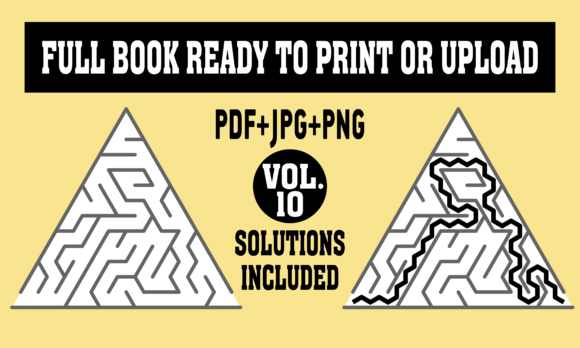
The product details highlight a deliberate structure: Separate PNG files for mazes and solutions, separate JPG files for the same content, a consolidated PDF, and specifications for 8.5″ x 11″ printing with “No Bleed.” This isn’t random assortment. Each file type serves a distinct purpose within a publishing or educational workflow.
The PNG and JPG separations offer flexibility. PNG files, often with transparency support, are ideal for further digital editing or integration into other composite designs. A content creator might use these within a larger activity book layout in software like Adobe InDesign or Canva. The JPG files provide a universally compatible, high-quality format suitable for quick printing, sharing via email, or uploading to platforms that prefer compressed images. Having both formats eliminates a conversion step, saving time and preserving quality.
The PDF file is the ready-to-distribute final product. This is the version you upload to a print-on-demand service like Amazon KDP, or send directly to a client or student. Its readiness implies it has been compiled, paginated, and formatted to the correct dimensions. This step is often a bottleneck for creators; having it completed means you can move directly to the publishing phase.
Integration into Publishing and Educational Processes
For an entrepreneur using Amazon KDP, Mazes for Kids - 10 fits into the workflow after the content design phase and immediately before publication. Your process might involve market research, outlining a book series, designing a cover, and then sourcing interior content. This maze product acts as that interior content. Because it is pre-formatted with the correct trim size (8.5″ x 11″) and the “No Bleed” setting, it bypasses the technical layout adjustments that often cause rejections during KDP’s review process. You simply upload the provided PDF, select your options, and proceed. This integration point is crucial; it turns a creative project into a technical execution with minimal friction.
For an educator or blogger, the integration happens differently. The separate image files (PNG/JPG) allow for incorporation into custom worksheets, blog posts, or digital learning packets. You might use a maze from the set as a warm-up activity in a lesson plan PDF you’re creating, or feature it on your educational website to drive engagement. The workflow here is about asset repurposing. You take a prepared component and embed it into your unique educational content, maintaining consistency in quality without starting from scratch.
Practical Implementation and Use Cases
Consider a small business owner running a parenting blog and an associated Etsy store selling digital activity packs. Mazes for Kids - 10 can serve both channels. For the blog, you use the JPG files to create visually engaging posts about problem-solving activities for children. For the Etsy store, you bundle the PDF with other assets to create a larger “Summer Fun Activity Pack.” The product’s structure supports this bifurcation without requiring extra work.
A freelance graphic designer contracted to create an activity book for a client can use the PNG files as layers within a larger design. This approach ensures consistency—all mazes share a cohesive style—and speeds up the production timeline. The designer’s workflow involves assembly, not creation from zero, focusing their effort on unique layout elements and client branding.
Factors of Efficiency and Long-Term Use
Preparation is inherent to the product; it’s already prepared. This addresses a common inefficiency: sourcing or creating individual assets, then standardizing them. Compatibility is broad, given the inclusion of standard web (JPG), editable (PNG), and print (PDF) formats. Usability is high because the files are logically separated (mazes vs. solutions), preventing confusion during assembly or teaching.
Organization is a subtle but important feature. Having distinct files for puzzles and their answers streamlines your file management. You can easily create two folders: one for student materials and one for teacher or parent guides. This simple structure supports repeated use, whether you’re a teacher using them across multiple classes or a publisher creating different books from the same asset pool.
For long-term use, the digital nature of Mazes for Kids - 10 means it is a reusable resource. Unlike a physical book you sell once, this digital pack can be the foundation for multiple products or used repeatedly in educational settings. Its value compounds over time within your content library.
Quality Control and Consistency
When you incorporate external assets into your workflow, consistency and quality are paramount. A product like Mazes for Kids - 10 offers a unified set of puzzles. The mazes likely share a consistent difficulty level, artistic style, and structural format. This uniformity is a form of built-in quality control. It ensures that if you use one maze in a product, the others will match, providing a professional, cohesive experience for the end-user. You avoid the jarring inconsistency that comes from patching together assets from disparate sources.
Seamless Integration into Your Routine
To integrate Mazes for Kids - 10 smoothly, first assess your typical workflow’s entry point. If you are a KDP publisher, your entry point is the “content upload” stage. Store the PDF in a dedicated “Ready for KDP” folder within your project directory. If you are a content creator who repurposes elements, your entry point is the “asset selection” phase during design. Store the PNG/JPG files in your digital asset management system, tagged appropriately for easy search.
A practical tip is to conduct a test upload or print. Before committing to a large project, upload the PDF to KDP’s previewer or print a single page from the JPG. This verifies compatibility and output quality within your specific environment, catching any potential issues early. This test integrates the product into your quality assurance routine.
Another integration method involves pairing the mazes with other tools. For instance, use the PNG files alongside a design tool like Affinity Publisher to build a book. Or, use the solutions PDF alongside a screen-sharing tool during virtual tutoring sessions to guide a student. The product interacts passively with other tools; it is the content fuel, while your software and platforms are the engines.
Beyond Publishing: Educational Workflows
In a classroom or homeschooling context, the workflow is centered on lesson planning and execution. Mazes for Kids - 10 can be positioned as an activity resource within a larger educational framework. A teacher might use a maze as a focused cognitive exercise during a morning session, employing the solution file for quick reference or to provide hints. The workflow integration involves downloading the file set, perhaps printing the relevant maze for the day’s lesson plan, and filing the solutions in a teacher’s guide folder. The efficiency gain is in not having to design or source a new puzzle daily; the resource is ready, allowing the educator to focus on pedagogy and student interaction.
For bloggers or affiliate marketers writing about child development, the product becomes a reference point or recommended resource. Your workflow involves researching article topics, writing content, and suggesting practical tools. You can discuss the benefits of maze activities and naturally mention Mazes for Kids - 10 as a ready-made solution for parents seeking quality materials. Here, the product integrates into your content creation process as an example or recommendation, adding concrete value to your advice.
Ultimately, Mazes for Kids - 10 exemplifies how specialized digital products can function as efficient modules within larger creative, commercial, or educational processes. By providing multiple formatted outputs and clear specifications, it reduces technical hurdles and standardizes quality. Its practical value is realized not just in what it contains, but in how it seamlessly connects to the next step in your workflow—whether that’s uploading to a platform, designing a composite work, or executing a lesson. Understanding these connection points allows you to deploy the asset effectively, saving time and maintaining focus on your broader project goals.