Streamline Your Creative Publishing Workflow
Imagine having a perfectly structured, professionally formatted canvas ready for your creative vision, allowing you to focus entirely on the art of the cover and the brand. That’s the core value of a KDP interior undated planner. It represents a fundamental shift in a designer’s workflow, moving from building every foundational element to applying your expertise where it truly shines: visual identity and user experience.
For graphic designers and creators exploring the low-content book space on Amazon KDP, this interior is more than just a template; it’s a high-quality design asset. It provides the essential, tested architectural layout—the consistent page structure, clean typography, and logical visual hierarchy—so you can invest your energy into crafting a cover that communicates your brand’s unique story and aesthetic.
The Designer’s Advantage: Focus on Visual Impact
When you receive a ready-to-use, KDP-tested manuscript, you’re freed from the meticulous task of aligning grids, setting up pagination, and ensuring print-ready margins. This lets you channel your skills into the areas that directly influence perception and engagement.
Your design effort can concentrate on creating a cover that acts as a powerful branding tool. You can develop a cohesive color palette, select fonts that enhance your brand identity, and integrate imagery that resonates with your target audience. This separation of interior structure and exterior brand application is a key principle in efficient editorial design.
Building a Cohesive Brand Experience
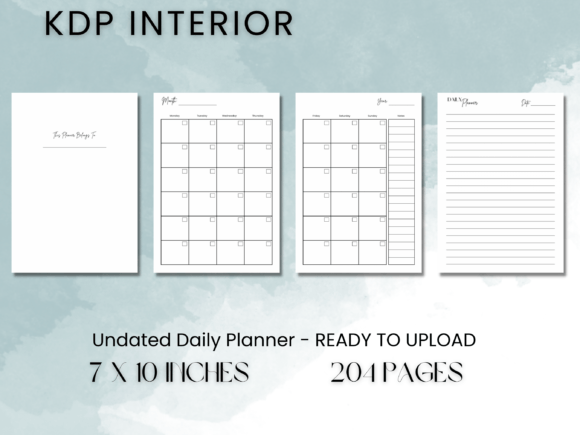
The interior itself, with its clean 7x10-inch layout and undated Monday-start calendars, offers a neutral, professional foundation. This is crucial. It ensures the user’s interaction with the daily planner pages is seamless and functional, a core aspect of positive UX design. Your custom cover then becomes the primary brand touchpoint, setting the tone and expectations before the user even opens the book.
Consider these applications for your design expertise:
- Brand Identity Systems: Use the cover to establish logo placement, brand colors, and typography that can extend to other marketing materials.
- Visual Communication: The cover imagery and graphics communicate the planner’s purpose and vibe, whether it’s minimalist, botanical, or modern professional.
- Packaging Design Principles: Treat the book as a product. The cover is its packaging, needing to attract, inform, and delight in a competitive marketplace.
Practical Tips for Maximizing the Asset
To leverage this interior file effectively, approach it as you would any premium design resource. Evaluate it against your creative goals.
First, assess its compatibility with your intended visual style. The provided structure is a blank slate in terms of brand expression. Your cover design should create a harmonious bridge between the interior’s functional clarity and your desired external aesthetic. Think about scalability: a strong cover design can inspire a suite of related digital products or social media graphics.
Focus on these key design elements for your cover:
- Typography: Choose a font pairing that is readable and conveys the right emotion—serious, playful, elegant.
- Color Palette: Select colors that not only look appealing but also align with psychological cues for productivity, calm, or creativity.
- Composition & Visual Hierarchy: Arrange title, subtitle, and imagery on the cover to guide the viewer’s eye and make the purpose instantly clear.
The 204-page structure, including the six monthly spreads and repeated daily pages, offers a predictable rhythm. This consistency inside allows the outside to be daring or unconventional if it suits your brand. It’s a balance between reliable usability and innovative visual design.
Ultimately, utilizing a professionally prepared KDP planner interior is a strategic design decision. It acknowledges that great visual communication often comes from specializing your effort. By ensuring the functional backbone is sound and tested, you can dedicate your creative resources to what truly differentiates your product in a crowded field: a compelling, memorable, and professionally presented brand identity. This approach not only elevates the final product’s aesthetics but also streamlines your creative workflow, allowing you to produce quality work with greater focus and efficiency.