The Genealogy Organizer Family Group Sheet: A Foundational Tool for Systematic Family History Research
In the expansive world of genealogy, where information comes in fragments from census records, birth certificates, old letters, and family lore, maintaining organization is the single greatest challenge for any researcher. The process is not a linear path but a sprawling network of connections and details. At the heart of a sustainable and accurate research workflow lies a fundamental document: the Genealogy Organizer Family Group Sheet. This is not merely a form to fill out; it is the primary structural unit for building a coherent family tree, a dedicated workspace for consolidating vital data about a single nuclear family.
Understanding the Role of the Family Group Sheet in Your Research Process
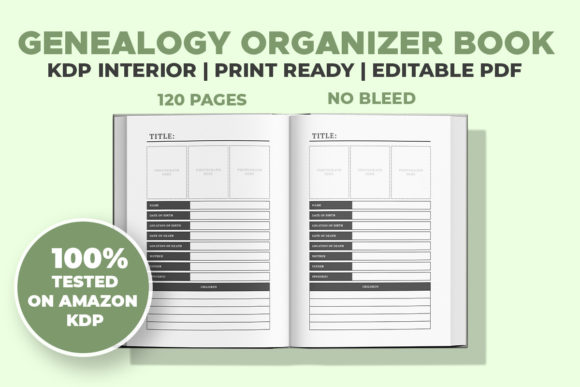
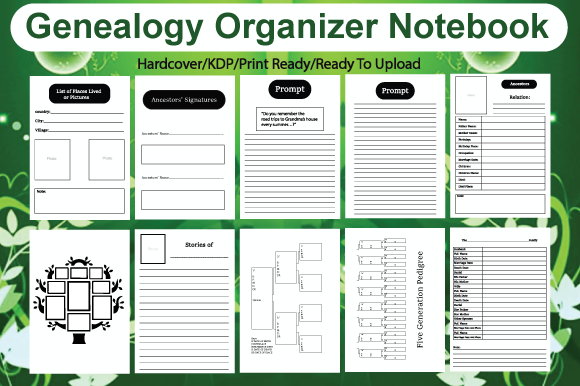
A Genealogy Organizer Family Group Sheet acts as a snapshot. It captures one family unit—typically a couple and their children—in a standardized format. Where digital databases and software are powerful for storage and linking, the physical or printable sheet serves a critical purpose in the active phases of research. It is a focused canvas. Before diving into a new online database search or visiting an archive, you can consult the sheet to clarify what you know and what you need to find. It answers the immediate questions: Who are the parents? What are their full names, birth dates, marriage details, and death dates? Who are the children, and what are their corresponding details? This consolidation prevents you from wasting time searching for ambiguous or half-remembered information.
The sheet fits into the broader genealogy process as both a planning and a quality control tool. During a research session, it is your reference point. After discovering a new piece of evidence—perhaps a child’s baptismal record in a newly digitized collection—you return to the relevant Family Group Sheet to integrate that data, checking for consistency with existing facts. This interaction creates a disciplined loop: research, documentation, verification. It forces a pause to log findings systematically, which directly combats the common pitfall of accumulating unsorted digital notes or bookmarks that later become incomprehensible.
Integration with Digital Tools and Long-Term Project Management
While the Genealogy Organizer Family Group Sheet is often a printable document, its utility is maximized when used in tandem with digital tools. Many researchers use a hybrid system. They might maintain physical binders with completed sheets for families they are actively researching, using them as quick-reference guides during online work. Simultaneously, the data from these sheets forms the core input for genealogy software like Family Tree Maker, RootsMagic, or online platforms like Ancestry.com. The sheet becomes the intermediary—a human-checked, clear summary before data entry into the digital tree, ensuring accuracy during that transfer.
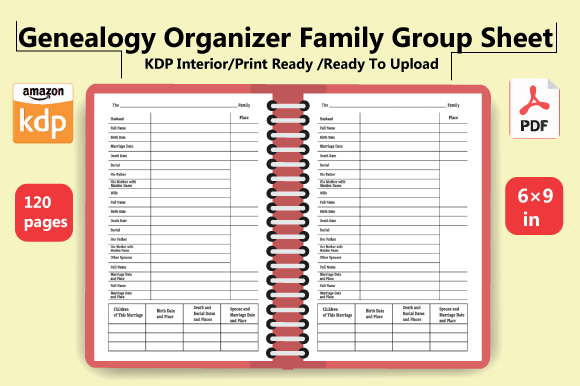
The practical value of a fully editable, vector-supported PDF, as found in professional Genealogy Organizer Family Group Sheet packages, is significant for long-term project management. As your research deepens, you will discover errors or find conflicting evidence. A static, handwritten sheet might become obsolete. An editable digital sheet allows you to correct information without starting anew. This supports the iterative nature of genealogy. Furthermore, the ability to resize the sheet for different formats—whether for a standard 6x9 inch notebook or a larger binder—means you can adapt the tool to your preferred physical organization system without losing consistency.
Establishing a Consistent Workflow with the Sheet
Implementing the Genealogy Organizer Family Group Sheet into your routine requires a simple but deliberate workflow. Start with yourself, or with a family unit you know most about. Fill out the sheet completely with what you know from memory. This initial act often reveals gaps immediately—perhaps you don’t have your grandmother’s exact birth location. That gap becomes your first research goal. With the sheet as your guide, you then target specific records to fill those gaps. Upon finding a record, you annotate the source directly on the sheet or in an accompanying notes section, linking the fact to its evidence. This practice builds a source-cited family history from the ground up.
For collaboration, the sheet is invaluable. When working with relatives to pool knowledge, a blank or partially filled Genealogy Organizer Family Group Sheet provides a structured framework for the conversation. It guides the discussion from vague stories (“I think Uncle Joe was born around 1925”) to targeted questions (“Can we find his birth certificate to confirm the date and place?”). Sharing a completed, editable PDF with a research cousin allows them to add their findings directly, merging efforts seamlessly.
Practical Considerations for Usability and Efficiency
The design of a good Family Group Sheet impacts efficiency. A well-structured sheet will have clear fields for each vital fact and ample space for source citations. The “No Bleed” and print-ready features of professional templates are practical considerations for the hobbyist or serious researcher who prefers physical copies. Bleed-free designs mean you can print at home without worrying about margins, and high-resolution files ensure that even small print text, like source citations, remains legible. This attention to production quality translates directly to everyday usability.
Organization at the project level comes from how you manage the sheets themselves. Some researchers organize sheets in binders by family surname or by maternal/paternal lines. Others keep digital folders matching their physical system. The key is that each family unit has its own dedicated document. This prevents the common chaos of having all information for all families mixed in generic notes. When you need to review the Smith family from 1850-1900, you pull one or two sheets, not scan through hundreds of pages of unstructured research logs.
From Data Collection to Narrative Building
Beyond raw data collection, the Genealogy Organizer Family Group Sheet serves a higher purpose: it is the foundation for narrative family history. Once the facts of a family are consolidated on a single page, patterns emerge. You might see a cluster of children born every two years, or notice a migration indicated by changing birth locations across children. These patterns, visible on the sheet, prompt deeper historical research into conditions, events, or motivations. The sheet moves your work from simple data entry into analytical thinking. It is the platform from which you write family stories, because it provides the verified chronological and relational framework those stories require.
For educators, bloggers, or freelance writers focusing on historical or genealogy content, these sheets are more than personal tools. They are client-ready deliverables. Using a professional, editable template allows you to present researched family histories to clients in a clear, standardized format. It demonstrates methodological rigor and provides the client with a permanent, easily understandable record. This professional application extends the sheet’s utility from a hobbyist activity into a service-oriented business workflow.
Ensuring Quality Control and Long-Term Value
The disciplined use of a Genealogy Organizer Family Group Sheet inherently enforces quality control. By requiring that each fact be placed in a specific field, it highlights inconsistencies. If a child’s birth date on an earlier sheet conflicts with a newly discovered census record, the discrepancy becomes glaring when you attempt to update the sheet. This prompts resolution—further research to determine which source is correct. Over time, a collection of completed, source-noted sheets becomes the most valuable asset in your genealogy work. It is a portable, comprehensible summary of your entire research project, independent of any specific software platform. If a software database fails or a website subscription ends, your sheets remain.
For the productivity-minded user, the long-term value is in time saved. Genealogy research is often revisited. You might work intensely on a lineage for months, then set it aside for a year. Returning to the project, a well-maintained set of Family Group Sheets allows you to reorient yourself in minutes, not days. You immediately see what you know, what you were questioning, and where you left off. This seamless re-engagement protects the investment of your initial research effort and makes the hobby sustainable over decades.
Ultimately, the Genealogy Organizer Family Group Sheet is a pragmatic choice for anyone committed to building a reliable family history. It fits naturally into the research process as a planning guide, an active workspace, and a permanent record. Its integration with both digital and physical systems makes it adaptable to any user’s preferred method. By centering your workflow around this foundational document, you transform genealogy from a scattered collection of facts into a structured, verifiable, and deeply rewarding project.