The Essential Guide to Fridge Temperature Logs: From Safety to Simplicity
In the bustling rhythm of modern life, our refrigerators and freezers stand as silent sentinels, preserving the food that fuels our days. Yet, their effectiveness hinges on a single, critical factor: temperature. Maintaining the correct temperature isn't just about keeping milk cold; it's a fundamental practice of food safety, cost management, and household efficiency. This is where the simple, yet profoundly useful, tool of a fridge temperature log comes into play. Far from being just a chore, it's a proactive habit that bridges the gap between our daily activities and the technology we rely on.
Why Temperature Matters: The Foundation of Food Safety
To understand the purpose of logging temperatures, we must first grasp why precise cooling is so vital. Refrigerators slow the growth of harmful bacteria, while freezers halt it almost entirely. The U.S. Food and Drug Administration (FDA) recommends refrigerator temperatures at or below 40°F (4°C) and freezer temperatures at 0°F (-18°C). Even a slight deviation, say a fridge creeping to 45°F (7°C), can significantly increase the risk of foodborne illnesses from pathogens like Salmonella and E. coli.
A common misunderstanding is assuming that if the fridge feels cold, it's safe. Modern appliances can have uneven cooling or malfunctioning sensors. Without verification, this assumption becomes a gamble with your family's health. A temperature log moves you from assumption to evidence, providing a clear record that your appliance is performing its most basic job correctly.
The Practical Relevance: Beyond Avoiding Spoilage
The significance of monitoring extends beyond preventing immediate sickness. It has practical relevance in several areas of daily life and even small business.
- Economic Savings: Consistently optimal temperatures mean food lasts longer. You reduce waste, saving money on groceries that would otherwise spoil prematurely.
- Energy Efficiency: A fridge running too cold wastes energy. A log can help you identify inefficiencies and adjust settings, lowering utility bills.
- Inventory Management: For households, restaurants, or daycare centers, a log complements food inventory systems. It provides documented proof that storage conditions were safe, which is crucial for liability and peace of mind.
- Appliance Health Monitoring: A gradual rise in recorded temperatures over weeks might signal a failing compressor or seal, allowing for proactive repair before a complete failure and costly food loss.
Introducing the Fridge Temperature Log Template: A Tool for Everyone
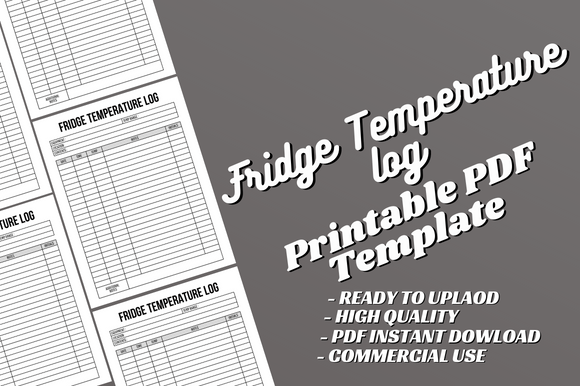
While the concept is simple—check and record the temperature—the practice often falls aside because of inconvenience. Where do you write it? How often? This is where a dedicated Fridge Temperature Log Book template transforms a good intention into a sustainable habit. These templates, designed for ease of use, provide a structured framework that removes the friction from the process.
Imagine a printable, complete PDF file, ready for use. You receive a 120-page document, formatted for standard 8.5x11 inches, with clear spaces for date, time, refrigerator temperature, freezer temperature, and notes. You might note "door left open" or "post-cleaning check." This turns sporadic glances at the appliance dial into a consistent, valuable dataset. Furthermore, the availability of a fully editable Canva interior template for platforms like Amazon KDP unlocks customization. You can adjust fonts, add your own branding or instructions, and tailor it perfectly for a home kitchen, a commercial food business, or an educational setting in a school cafeteria.
How It Fits Into Modern Life and Technology
In an era dominated by smart technology, a paper log might seem analog. However, it fits beautifully as a complementary, fail-safe practice. Smart fridges may send alerts, but a manual log ensures a human verifies the reading regularly. It also serves as a tangible record that doesn't rely on Wi-Fi or software updates. For the tech-savvy, the editable Canva template represents the democratization of design—making professional, functional tools easily available for everyone to create and adapt. It bridges the gap between simple daily activities and the creative, customizable potential of modern online platforms.
Building a Broader Understanding: The Log as Part of a System
To use a temperature log effectively, it's helpful to see it not as an isolated task, but as a component of a broader food safety system. Here are natural examples of how it integrates:
- For Home Cooks & Families: Combine the log with a meal planning calendar. Checking temperatures weekly when you plan meals creates a natural routine. A note in the log like, "Temp stable, safe to store bulk cooked beans for weekly lunches," provides confidence.
- For Creative Food Businesses (Bakeries, Catering): In a business where reputation is everything, a documented temperature log supports your commitment to quality. It can be part of a hygiene audit file, showing regulators or clients that you monitor critical control points.
- In Educational Contexts (School Science, Nutrition Classes): A temperature log is a perfect practical tool for teaching students about microbiology, food preservation, and data collection. They learn science through a real-world, daily application.
A key assumption to clarify is that logging is a time-consuming burden. With a well-designed template, the process takes less than a minute per check. By doing it twice a week, you invest under two minutes weekly for a significant return in safety and savings.
Implementing Your Log: Steps for Success
Starting is straightforward. Using a ready-to-upload template simplifies the process immensely.
- Get a Reliable Thermometer: Use a dedicated appliance thermometer, placed in the center of the fridge and freezer, not on the door.
- Establish a Routine: Link your checks to another habit, like unloading groceries or Sunday morning cleaning.
- Record Consistently: Fill in the template's fields for each check. The notes section is invaluable for tracking anomalies.
- Review Periodically: At the end of each month, glance at your log's data. Look for patterns or creeping changes.
- Customize if Needed: With the editable Canva file, you might add columns for a second fridge, or reminders for seasonal adjustments.
The KDP Ready Template: Empowerment Through Customization
For those looking to share this tool or integrate it into a larger project, the specifications of a KDP tested interior are designed for practicality. The "no bleed" design means all content is safely within margins, perfect for creating a print-ready log book. The instant download and editable nature mean you are not just a consumer but an adapter. You can take the core utility and make it your own—adding tips, translating text, or combining it with other logs like a pantry inventory. This aligns perfectly with the principles of helpful content: providing a functional solution that users can understand and apply immediately, and then modify to fit their unique context.
In conclusion, a fridge temperature log is more than a chart on paper. It is a simple practice rooted in science, with direct impacts on health, economics, and appliance care. By leveraging a thoughtfully designed template—whether a printable PDF or a customizable Canva file—this practice transforms from a vague recommendation into an easy, integrated part of managing our homes and businesses. It empowers everyone, from beginners to experienced food handlers, with data and control over one of the most commonplace yet critical technologies in our daily lives: the humble refrigerator. Building this habit fosters a broader understanding of how attention to detail in our daily activities creates a safer, more efficient, and more mindful environment.