The Primary Story Journal: A Structured Template for Creative Output
For writers, educators, and creative entrepreneurs, the process of translating ideas into tangible content can often be hindered by unstructured beginnings. A blank page offers infinite possibility, but also requires significant initial effort to define its format and purpose. The Primary Story Journal template addresses this specific point of friction by providing a pre-defined, clean interior layout designed for Amazon KDP. It serves not as a finished product, but as a foundational tool, enabling creators to bypass layout design and focus immediately on content creation and publication.
Core Characteristics and Practical Function
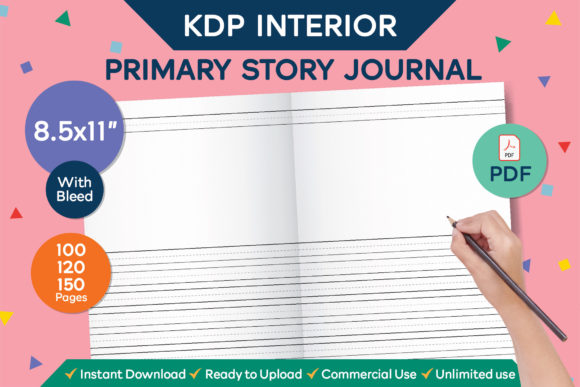
The template is fundamentally a draw and write journal format. Its most notable structural feature is the deliberate page sequencing. The first page is reserved for a name field, personalizing the journal for its owner. Page two is intentionally left blank, a simple but thoughtful design choice that could serve as a decorative frontispiece or an unexpected canvas. The actual journaling pages begin consistently on page three. This removes any ambiguity for the end-user and establishes a predictable rhythm from the very first entry.
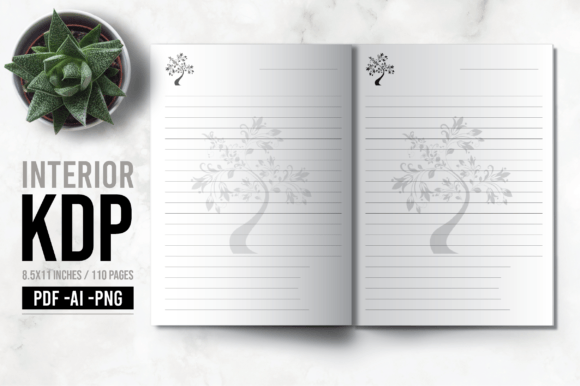
From a production standpoint, the offering is practical. It includes three separate PDF files, each corresponding to a standard page count: 100, 120, and 150 pages. All are formatted for the common 8.5x11 inch trim size and include a bleed area, which is a critical technical requirement for professional-looking print books where color or design elements extend to the edge of the page. The inclusion of multiple page counts provides immediate flexibility, allowing a publisher to choose a length that fits market expectations or cost parameters without needing to modify the file.
Evaluating Usability and Publisher Value
The primary value of the Primary Story Journal template lies in its readiness. The files are described as high-resolution and quality-checked for KDP, which, if accurate, translates to reduced pre-publication workload. For a publisher, the technical hurdles of setting up correct dimensions, margins, and bleed are already solved. This allows the project energy to be directed towards marketing, cover design, and content variation rather than interior formatting.
Its strength is its consistency and reliability as a base model. Every journal created from this template will have identical pagination and layout. This is advantageous for building a series or for educators creating standardized materials for a classroom. The “draw and write” combination is a proven format for encouraging expression, particularly useful for younger audiences, but the clean lines and ample space also make it suitable for adult sketch-noting or structured reflective writing.
Potential Limitations and Considerations
While the template excels in providing a solid foundation, its simplicity could be a constraint for projects requiring unique interior design. It is a single, fixed layout. Publishers looking for varying page designs—alternating between full-page drawing and lined writing pages, for instance—would need to seek a different template or modify this one. Furthermore, the description notes the template is “ready for upload,” but final success on KDP still depends heavily on the publisher’s cover design, description, and keyword strategy. The template is a component of the product, not a guarantee of its market performance.
Audience Fit and Application Scenarios
This resource aligns well with specific creator profiles. Amazon KDP entrepreneurs, especially those new to self-publishing, benefit from a vetted interior that eliminates a major technical step. Educators and coaches can use it to rapidly produce custom journals or workbooks for students or clients, adding their own cover and instructional material. Content creators and bloggers might leverage it as a physical product extension of their brand, offering a themed journal to their audience.
The template is particularly effective for projects where volume and standardization are priorities. For example, a small business creating a branded journal as a promotional item, or a freelance designer offering journal creation as a service to multiple clients, would find the reusable, multi-page-count files efficient. For the serious hobbyist looking to publish a single, personal project, it provides a professional baseline that would be difficult to achieve from scratch without graphic design software expertise.
Long-Term Value and Strategic Use
Investing in a well-structured template like the Primary Story Journal can have compounding value. Mastering the publication process with a reliable interior allows a publisher to iterate quickly. Once a successful journal is published using this template, subsequent variations—different covers, targeted themes—can be produced with significantly reduced effort, enabling a focus on niche markets and audience testing.
The practical recommendation for potential users is to integrate the template into a broader product development checklist. It solves the interior layout step. The remaining steps—defining a unique cover concept, crafting a compelling book description, researching competitive pricing—are where the publisher’s effort must then be concentrated. Used strategically, it functions as a modular component in a scalable publishing workflow.
Ultimately, the Primary Story Journal template is a tool for reducing friction in the path from idea to physical product. Its worth is measured not in its artistic complexity, but in its functional clarity and technical readiness. For those whose goal is to produce a clean, standard draw and write journal on Amazon KDP without engaging in interior design, it provides a direct and practical solution. For projects requiring highly customized interiors or intricate layouts, its utility may be limited. Its effectiveness is therefore contextual, hinging on the precise alignment between its fixed format and the publisher’s specific product vision.